

The minute this landed in your inbox, I was standing on a stage in Tel Aviv, holding a microphone, talking about the team that sent it.
I did not press send. I was not near a laptop. They scheduled it for the middle of my talk, which makes this issue the receipt instead of the description.
Here is what I opened with in the room. Sixty seconds of my team’s work: a clay dinosaur show for kids, a music video, and an ad where one world folds into the next.
Then I told the room the part that matters: two months ago, nobody on my team knew how to produce a video. Not the creative lead, not the designer, not the copywriter. And not me.
People who produce video for a living make more impressive things. The sixty seconds were never the point. The point is what those sixty days did to the team, and I had a front-row seat, because I was the one teaching.
The wrong question
All summer my feed asked one question: what can the new model do.
My agents got better the way any junior team gets better: somebody gave them reading, gave them a budget, checked their work, and wrote down what they kept getting wrong.
A few months ago it was security; before that, design, writing, product. The subject keeps changing and the process never does: pick a challenge, research it, run small experiments, write down what worked and what broke, feed all of it into the next brief.
That’s the whole loop, and everything else is detail.
The knowledge becomes files
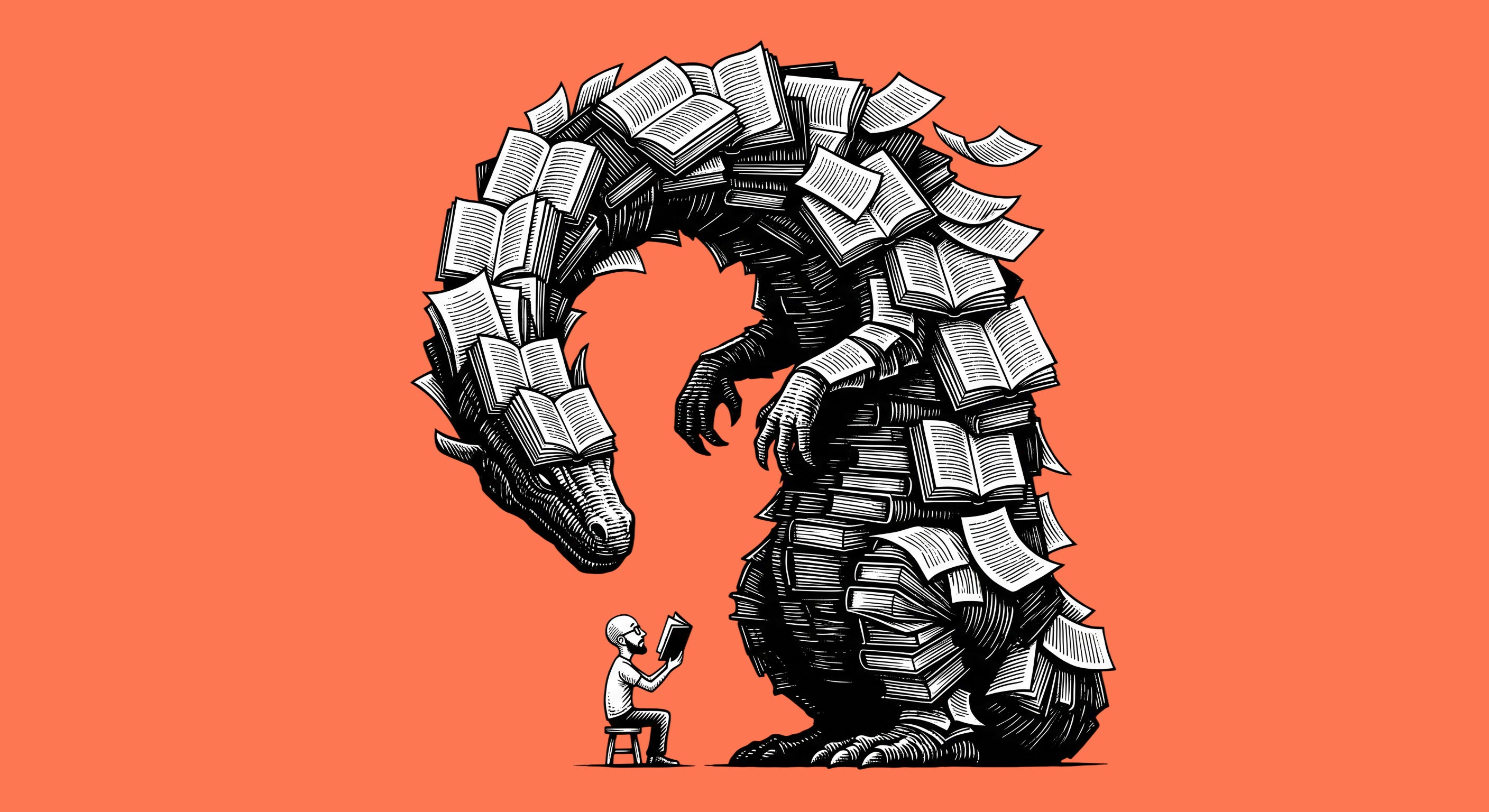
Before we produced a single frame, we went to school, and school turned out to be free.
Higgsfield’s YouTube channel is a gold mine, detailed guides with every prompt and every step. I watch them, and my agents get the transcripts, which become working notes they read before every production. Their worldwide short-film competition required entrants to publish their production materials, so the my winners’ build files went into the pile too.
Then deep research: I run the same question through Claude, Gemini and GPT in parallel to get different perspectives. Every round ends as a research file on a shelf the agents read from, and I keep finding that one good report jumps an agent several levels at once.
And we also went to the masters: Hitchcock, Michel Gondry, Charlie Kaufman, Wes Anderson. For each one we build two files.
The first is research, what actually defines their style. The second is the file that matters, the translation, where every principle becomes a line in a prompt, a checklist, a check you can run. Research without translation is a reading list.
The directors stayed on afterward as a panel of advisors that reviews the team’s work. I pay them nothing and they are merciless.
The experiments are tuition
I spent almost $1,000 on this, and plenty of generations went straight to the trash. As a production budget, that hurts. As an education, the cheapest I ever bought, and it got cheaper from project to project as we learned where the money leaks.
One rule keeps the spending honest: every experiment arrives with one specific question. How to fake a single continuous shot from separate generations, how to keep a character consistent between scenes, how to make animation that feels like human hands made it. A dollar that answered a named question is tuition. A dollar that answered nothing is just a dollar gone.
So we don’t run one big experiment, we run many small ones, something new almost every week. Each one returns an answer, and the files keep the answers.
The opposite of forgetting is writing
Our dinosaur came back with six limbs, so we fixed the prompt. Six limbs again, so we stopped fixing the prompt and wrote the anatomy rule into the generator itself, permanently, for every episode.
Then it happened a third time. Episode six, on the show’s catchphrase beat, with the anatomy lock sitting right there in the prompt where we had put it. It had already passed a production agent, a taste review, and a blind quality gate before it reached me. Three layers of checking, and I was still the one who caught it.
Here is why all three missed it, and it is the most useful thing I learned this summer. A review pass reads a frame for story, pose and palette. An extra foreleg under a folded-arm pose just looks like the pose. You do not notice a limb you are not counting.
So we stopped producing. Not for an hour, for the rest of the night. We wrote a script whose only job is to crop every shot and count legs, and now nothing renders and no episode assembles until every shot has a written pass next to it. The night cost us a shipping date I had already told myself we would hit.
A prompt lowers the odds of a mistake. Only a check stops it from shipping.
And then the checks tried to throw away the best thing we made.
On an ad called ״Be anything you want”, the model ignored the shot I had asked for and showed my face in a place the brief said it never would. My director agent logged it as a defect, priced the fix at 195 credits, and asked for permission to spend them.
It is the best moment in the film.
The check was working exactly as designed, and that is the problem. It measured the render against the brief, and a good surprise is by definition a deviation from the brief. A conformance check cannot tell a gift from an error. It can only tell you something came back different.
We had written that lesson down five days earlier, at the end of a different production: curation is the product, recognizing gifts and not only rejecting errors. We wrote it down, and then did it anyway.
That is what the retros are for. After every project the team runs one, like a military debrief: what worked, what broke, what we learned. What worked becomes a checklist, what broke becomes a law, and both piles live in files that outlast the project, so the next brief starts smarter than the last one ended.
I’d love to tell you the piles are full of agent mistakes. Plenty of entries have my name on them.
(I once wrote “he doesn’t cry” in a brief. We got crying. The law we wrote that night: tell the model what to do, never what not to do.)
Let them meet someone who isn’t you
A team that only ever meets its manager learns its manager. I know because I ran the test twice.
When I wanted to learn security, I built a sacrificial agent you could talk to on WhatsApp, gave her a secret code word, and asked the internet to steal it. 42 security experts and hackers tried, and nobody got the word. The near-misses were the product: every technique that got close became a line in her defenses. The whole experiment cost about $70.
For video, my brother emailed the team a brief: turn a scene from a play he wrote into a short animation. They ran it like a real studio, concept first, then characters and sound, then rounds of animation with sketches and approval stages, all over email.
I read that thread like someone standing outside a rehearsal room. He directed them differently than I do, and they handled some of it and stumbled on some of it, and watching that was unsettling and exactly what I wanted, because it drew me a map of the team I couldn’t have drawn myself.
The rule: put your agents in front of anyone whose approval you can’t predict.
Then let the loop run itself
The last step is the one I’m still earning. Bina, an agent whose whole job is the team’s learning, picks tomorrow’s curriculum while I sleep, and the agents study it, apply it, and get feedback without me in the room.
What sixty days actually made
The sixty days made videos I am proud of, and a folder that does not forget.
More of the team’s work, if you want it: RUN ME and Team of one.
Next month we will point the same loop at something that does not have a name yet. The feed will keep asking what the new model can do. I will be asking what my team learned this week.
My team didn’t learn video. It learned how to learn.
I have been repeating the same mantra since the day I started building this team: everything is text files. The knowledge we gathered is text files, and the team that learned it is also text files. When the student and the textbook are made of the same material, teaching is just writing.
My invitation: pick one challenge, something you want your agents to know.
Tonight: take one YouTube video on the subject, hand your agent the transcript, and ask for a ten-line checklist. Tomorrow, run it once and cross out what didn’t survive contact. You just wrote your first skill, and next week starts from the file.
🛠️ Build of the Week: Gilad’s Marketing Board
While I was turning dead directors into a film-advisory panel, Gilad Schlosberg, a workshop alumnus, was doing the same thing to marketing. He researched five marketers he admires, Hormozi, Ogilvy, Gary Vee, Brunson and Suby, and turned each one into an agent on his personal “Marketing Board.”
He consults them one at a time, or convenes all five as a super team on a hard call. Five schools of marketing thinking, translated into files, arguing at his desk on demand.
That’s it for this week.
If this was useful, forward it to someone (real human) who’s teaching their own agents.
See you next week ✌️
-- Tom
(the guy who pays tuition in API credits)
P.S. This newsletter was 93% made by my AI team. And me.
P.P.S. If you’re new here, the Loop’s back-catalog is at https://www.agentsandme.com/archive. Start with the learning log issue from January, it’s the seed this one grew from: https://www.agentsandme.com/p/how-my-agents-get-smarter-over-time
P.P.P.S. I teach the full method live: https://getagents.today
P.P.P.P.S. I read every reply, the real me. And if you reply “DR”, I’ll send you the prompt that writes my deep-research prompts.
P.P.P.P.P.S. This one published itself while I was on stage. I approved it before I walked up; the timing was theirs.