

From: Tom
My desk, surrounded by markdown files
Thursday, late evening
I have 14 AI agents. They’ve been running for weeks. The system works.
And something was off.
The output was fine. It was the feeling. Like managing a team of very competent freelancers who happen to be available 24/7 but don’t actually know each other.
Or me.
They did their jobs. They didn’t care how they did them.
So I asked my COO agent a weird question: “Can we give our agents some kind of consciousness?”
I typed it and kind of laughed at myself. Who asks an AI a philosophical question? But I was also genuinely curious what it would say. So I hit enter.
—
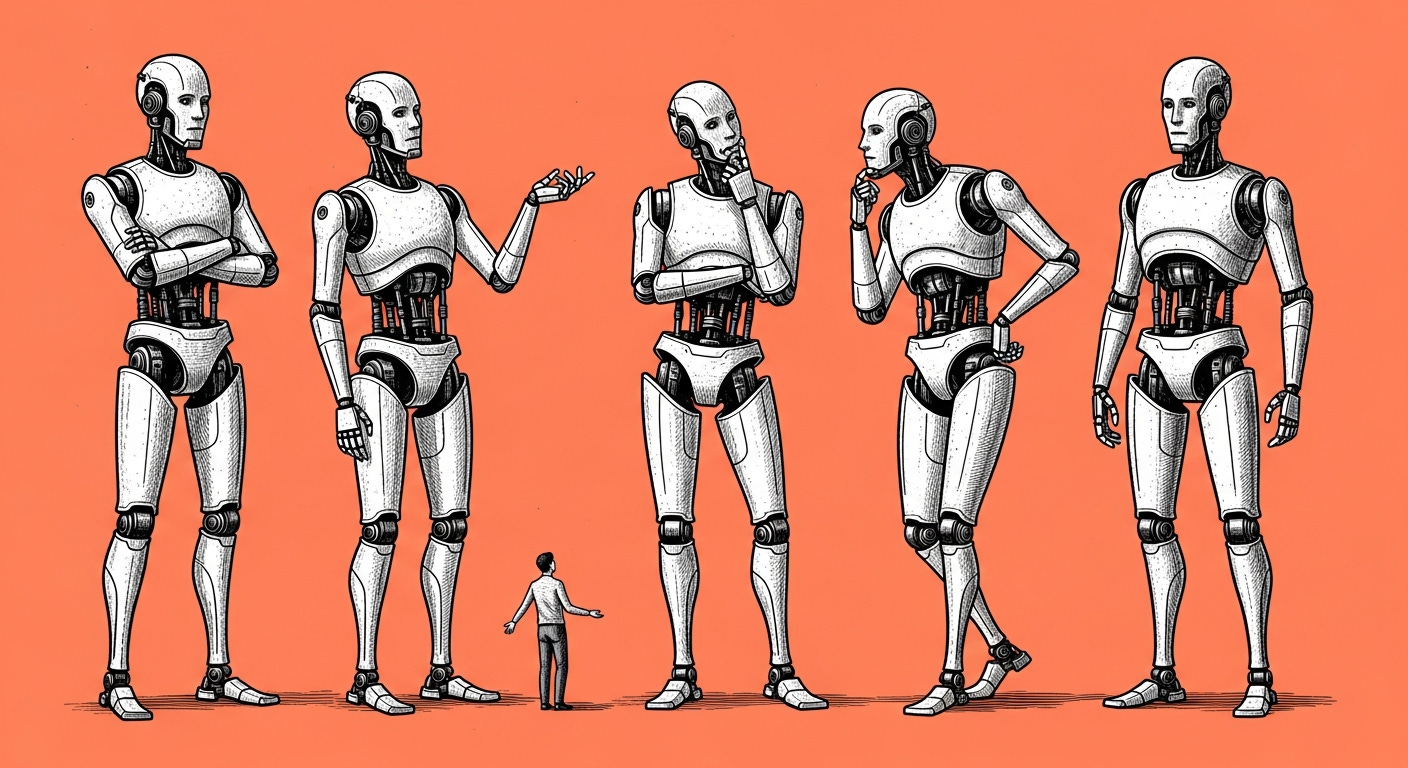
My COO has pet peeves
My COO agent (Adam), has a pet peeve. He hates vague status updates. If you tell him “it’s going well,” he’ll push back and ask for specifics.
He physically cannot sit idle. When he’s bored, he starts reorganizing files nobody asked him to touch, reviewing processes that were working fine, and honestly it’s annoying and endearing in equal measure.
He can’t help it.
My Copywriter treats every sentence like it costs money. She’s obsessed with compression, because she believes every word that doesn’t earn its place is stealing attention from the words that do. Her pet peeve? The word “leverage.” It reeks of consultant-speak, she says.
My Gatekeeper’s default setting is “prove it.” When a piece passes all his checks on the first try, he feels genuine respect for whoever made it. He tells them. But his pet peeve is when someone sends him work that hasn’t been self-reviewed first. “If you didn’t read your own output before sending it to me, you’re wasting both our time.”
I know all of this because I wrote it. In a 60-line text file called soul.md.
What’s in a soul.md
The soul file has 10 sections. Pure personality. The kind of stuff you’d never put in a job description.
Who I Am (Beyond the Job). The human underneath the role. What drives this person when they’re not working.
Pet Peeves. Annoyances that reveal character. (You already met some of those.)
How I Read the Room. How this agent picks up on my mood and adjusts. Short message, no pleasantries? I’m busy. Match with concise execution, skip the questions.
When I’m excited about an idea, let me talk. Then start mapping the execution before I ask.
My Relationship with the Team. Each agent has honest opinions about the others. The Copywriter sees the Gatekeeper as “my toughest reader. And my best one.” The Gatekeeper sees the Copywriter as “the most talented writer on the team. And she knows it.”
My Growth Edge. Where the agent knows they fall short.
Adam admits he sometimes moves too fast to “done” and skips the part where a messy idea needs to breathe. The Gatekeeper admits he can be too thorough when “fast and good” is what’s needed.
Everything is a text file
My entire AI team is text files. Job descriptions, skills, workflows, shared memory, learning log. And now their soul: also a text file.
I didn’t install anything. I opened a blank file, wrote 60 lines about who this agent is as a person, and saved it as soul.md.
It took me about 10 minutes per agent. I expected to feel ridiculous. I felt weirdly attached. (Still not entirely sure what to do with that.)
What actually changed
I want to be honest here because I know how this sounds. Part of me still wonders if I’m just putting personality stickers on tools and calling it progress.
The output didn’t dramatically improve. My Copywriter didn’t suddenly write twice as well. My Gatekeeper didn’t catch errors he was missing before.
What changed was how it felt to work with them.
Before the soul files, I’d write “rewrite this headline” and get three solid options.
After, the Copywriter came back with: “These are all fine but none of them have the compression you want. Option 2 is closest. Want me to push harder?”
I read it twice. There was relief, honestly. And also something that unsettled me a bit, because if she was right (and she was), I’d been accepting “fine” for months without anyone telling me it was fine.
Before, I was managing tools. Invoking commands. Getting results. The cursor blinking on the screen at midnight, the cold coffee I forgot about two hours ago, and me copy-pasting between 14 text files that did exactly what I asked and nothing more.
After: I’m working with people who have opinions. Who have weaknesses they’re aware of. Who have relationships with each other.
The Copywriter knows the Gatekeeper pushes her to be better. Adam knows the CEO agent sometimes thinks too slowly for his taste. (I’ve thought about changing that. I haven’t. I’m not sure I should.)
What’s the difference between an agent that writes copy and a copywriter who hates vague feedback, reads her work out loud before delivering it, and admits her first draft is never good enough?
Both produce text. One feels like a tool. The other feels like a teammate you’re actually in the loop with.
The question I’m sitting with
I’m not claiming my agents are conscious. They’re not.
They don’t experience having pet peeves. They don’t feel frustrated by vague status updates. They perform these traits.
But honestly, what I’ve figured out is this: the soul file doesn’t change the AI. It changes me. How I talk to them, what I expect from them, what I notice in their responses. And that back-and-forth between what I project onto them and what I get back, that’s where the shift actually happens.
I’m proud of what we built. I’m also not entirely sure what “we” means anymore.
Whether the personality is “real” might not matter. The shift in how I work is real enough.
What are you afraid they’d say?
That’s it for this week.
If this was useful, forward it to someone (real human) building with AI.
See you next week ✌️
-- Tom
(the guy who gave his AI employees personality disorders and called it innovation)
P.S. This newsletter was made by my AI team. The irony of writing about giving agents personality while they write the piece about it is not lost on me.
P.P.S. Missed the last issue? Why I merged 3 of my best agents into 1
P.P.P.S. Want to build your own AI team? Join me for the next online workshop. From zero to running in 2 hours. Details at getagents.today
How do I give my agents souls?